

Rooted in Resilience: The Homegrown Charm of Kasambabezi Lodge
In a town built on big names and bigger budgets, a family-run lodge on the

Words by Sarah Kingdom
As the plane began its descent into Muscat, I pressed my forehead against the window, keen for a glimpse of Oman’s capital. Jagged, rust-coloured mountains gave way to a sea of whitewashed buildings, that in turn gave way to a coastline kissed by the turquoise waters of the Arabian Sea.
On the southeast corner of the Arabian Peninsula, the Sultanate of Oman is renowned for the warm welcome it gives visitors. The country manages to combine a rich history and strong traditions, with stunning natural landscapes, enchanting cities and a decidedly modern outlook. From the bustling markets and ornate mosques of Muscat to the dramatic Jebel Akhdar mountains Oman is a tapestry of sights, sounds, tastes and activities. The country has been attracting intrepid travellers for years, but the relaxing of visa rules, a few years ago, has opened this desert sultanate up to a wider audience. Untouched by mass tourism and without the skyscraper flashiness and crowds of its UAE neighbours, what sets Oman apart from many of its neighbours on the Arabian Peninsula, is its commitment to authenticity. Oman has resisted the pull of mass tourism, instead preserving its cultural and natural treasures, while embracing modernity. Visitors can find themselves wandering centuries-old souks one moment, marvelling at sleek Islamic architecture the next, or revelling in a diverse geography that includes dramatic mountains, vast deserts, palm-filled oases and beautiful beaches. Whether planning to explore ancient forts and castles, wander markets and mosques, hike rugged mountain ranges, or visit some of the most stunning beaches of the Arabian Peninsula, Oman offers so much.
After some speedy immigration formalities, we were through the airport and into our waiting chauffeur-driven car. We were heading straight out of town and into the Hajar Mountains. The road wound through the outskirts of Muscat, lined with palm trees and whitewashed villas. The bustle of the city gave way to the rugged vastness of the Omani desert. As we got closer to the mountains the landscape became even more dramatic, with jagged peaks rising against the clear blue sky. The air grew cooler and fresher as we climbed, and we passed small villages and traditional stone houses clinging to the hillsides.
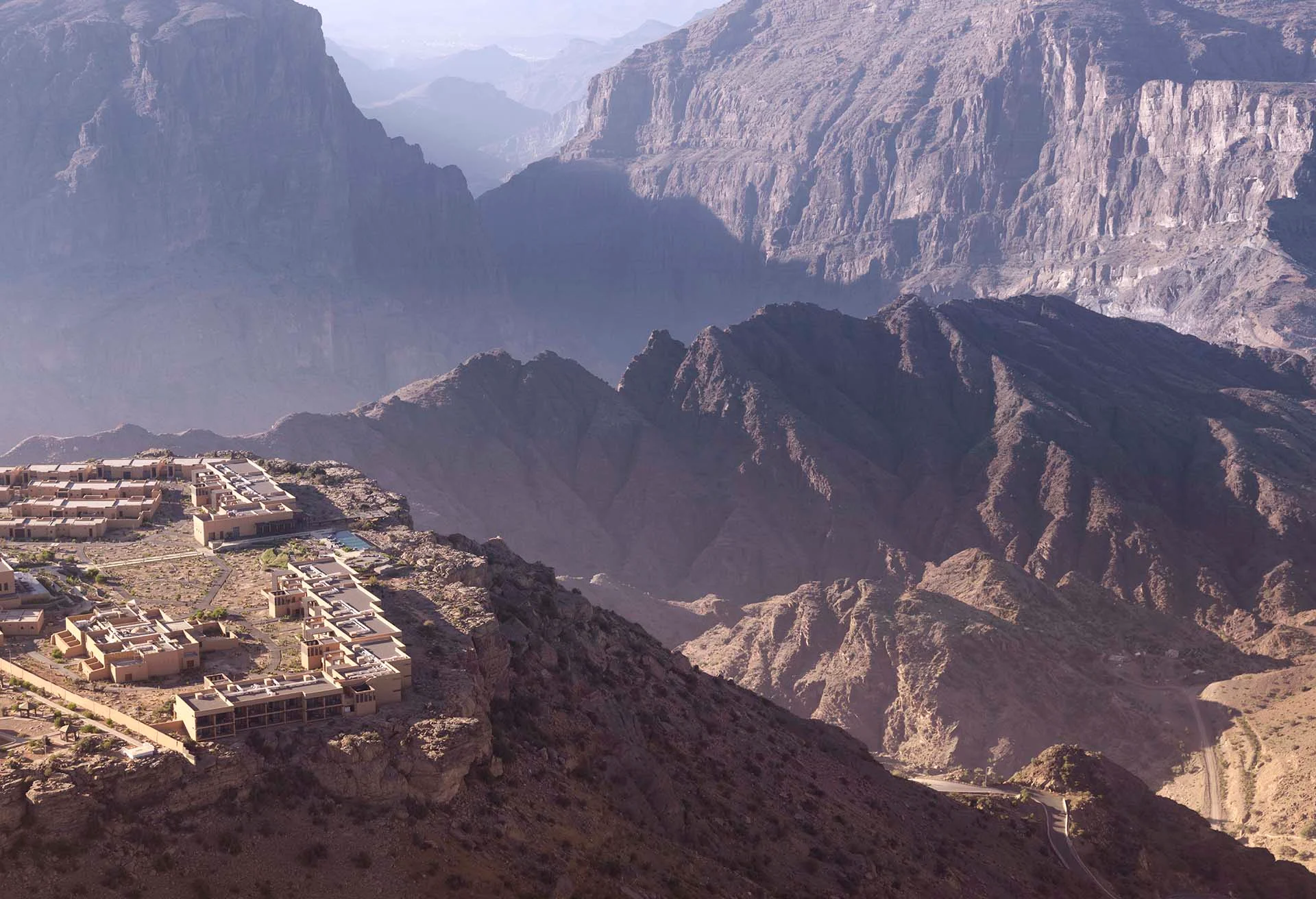
It took construction crews seven years to finish the twisty and steep road that took us from Muscat up to the remote Saiq Plateau. The road was a marvellous feat of engineering that changed the lives of the local villagers, who’d previously had to negotiate the rugged terrain by donkey. And at the end of the road, and the end of our two-hour journey, lay the stunning Anantara Al Jabal Al Akhdar Resort.
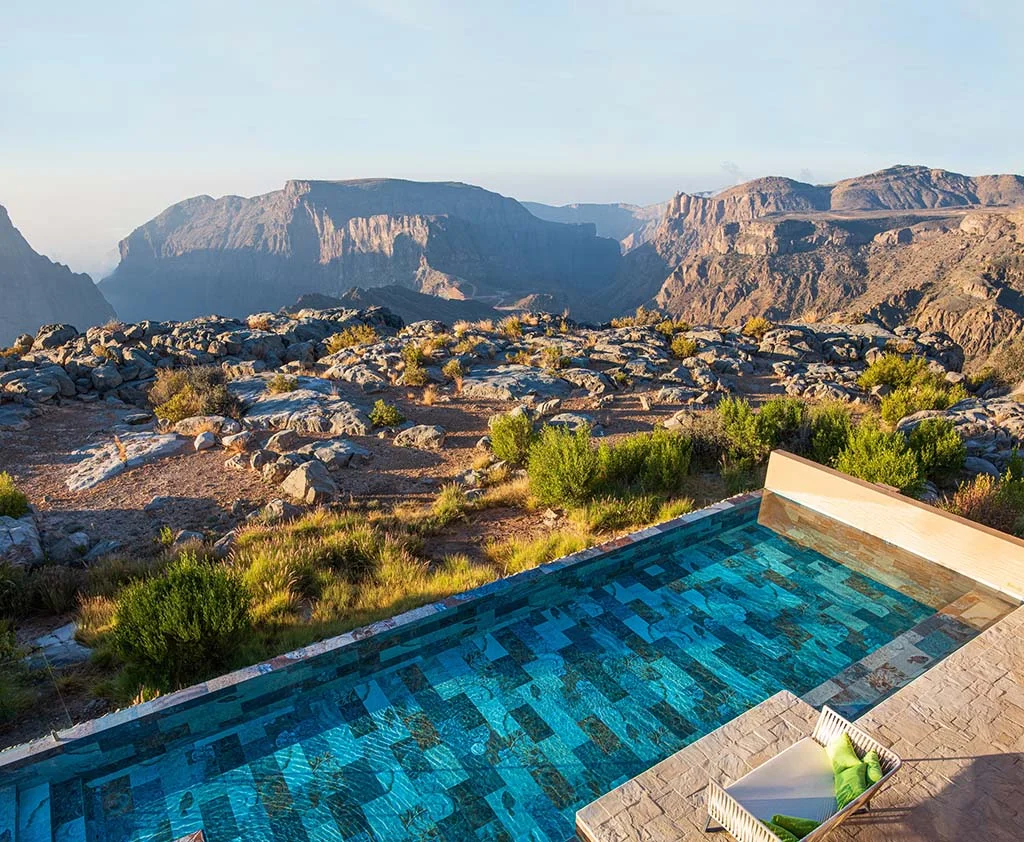
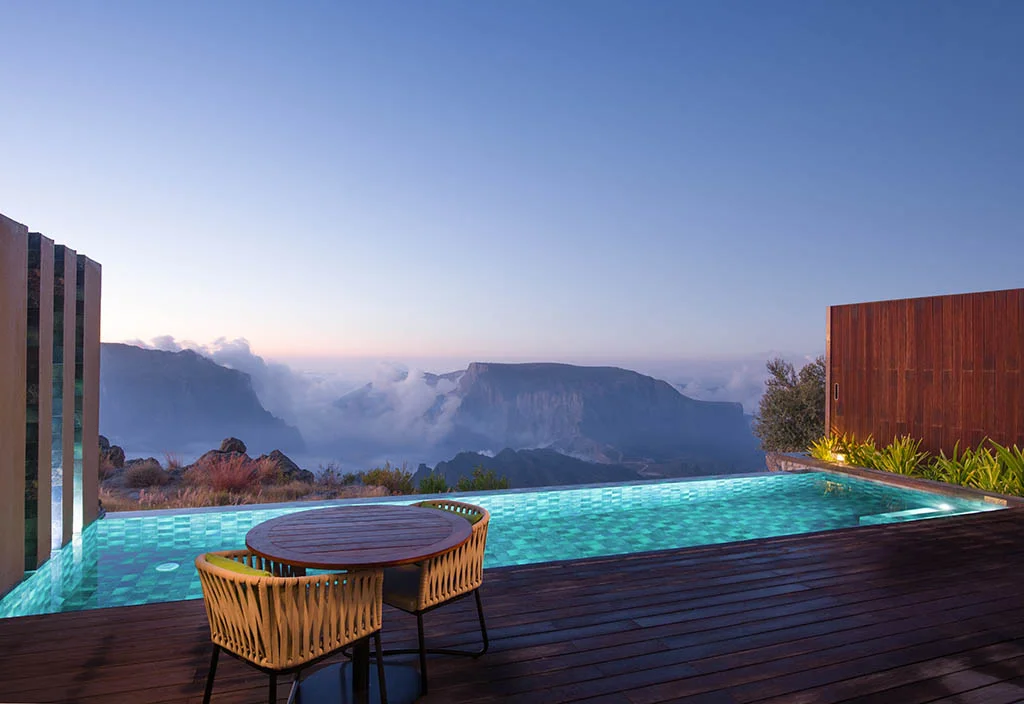
We were ushered to our room which, perched on the edge of a steep canyon, 2,095m above sea level had the most incredible of views. Light filled the room, glistening and reflecting off our private swimming pool, and we could see remote-looking clusters of buildings dotted along the opposite side of the canyon. We decide to head out and explore. The path was rocky and steep, uneven steps led down to three small villages, that clung to the almost vertical sides of the ravine. The villages hadonce been inhabited by farmers and their families,but were now predominantly abandoned. Fifteen or twenty years ago most of the inhabitants had moved to a new nearby town, attracted by an easier lifethan eking out a living in this remote and tough place. Many of those who had moved had retained their houses in the village though, and still visit to attend to their crops and maintain the ancient ‘al falaj’ irrigation system, essential for keeping their crops and fruit trees alive.
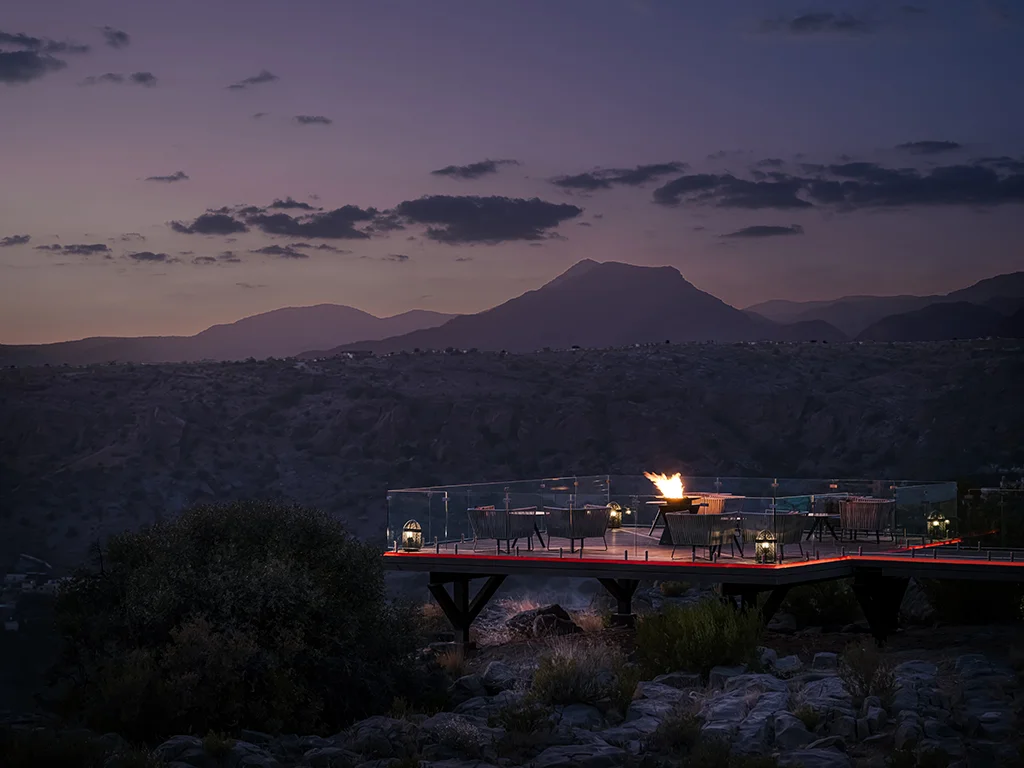
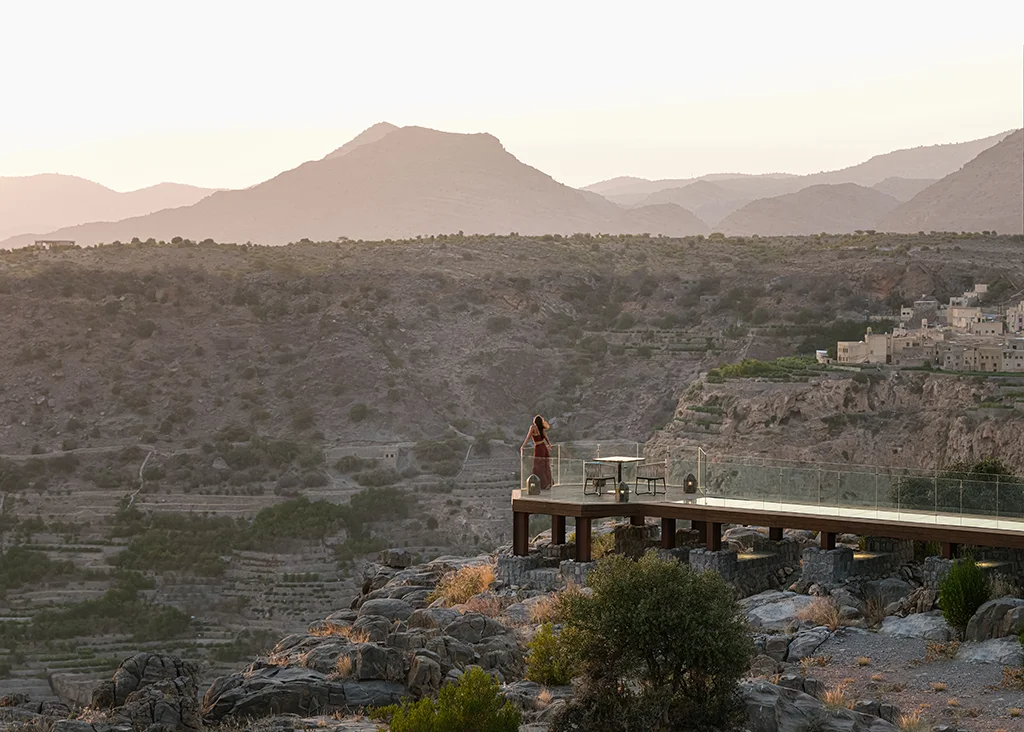
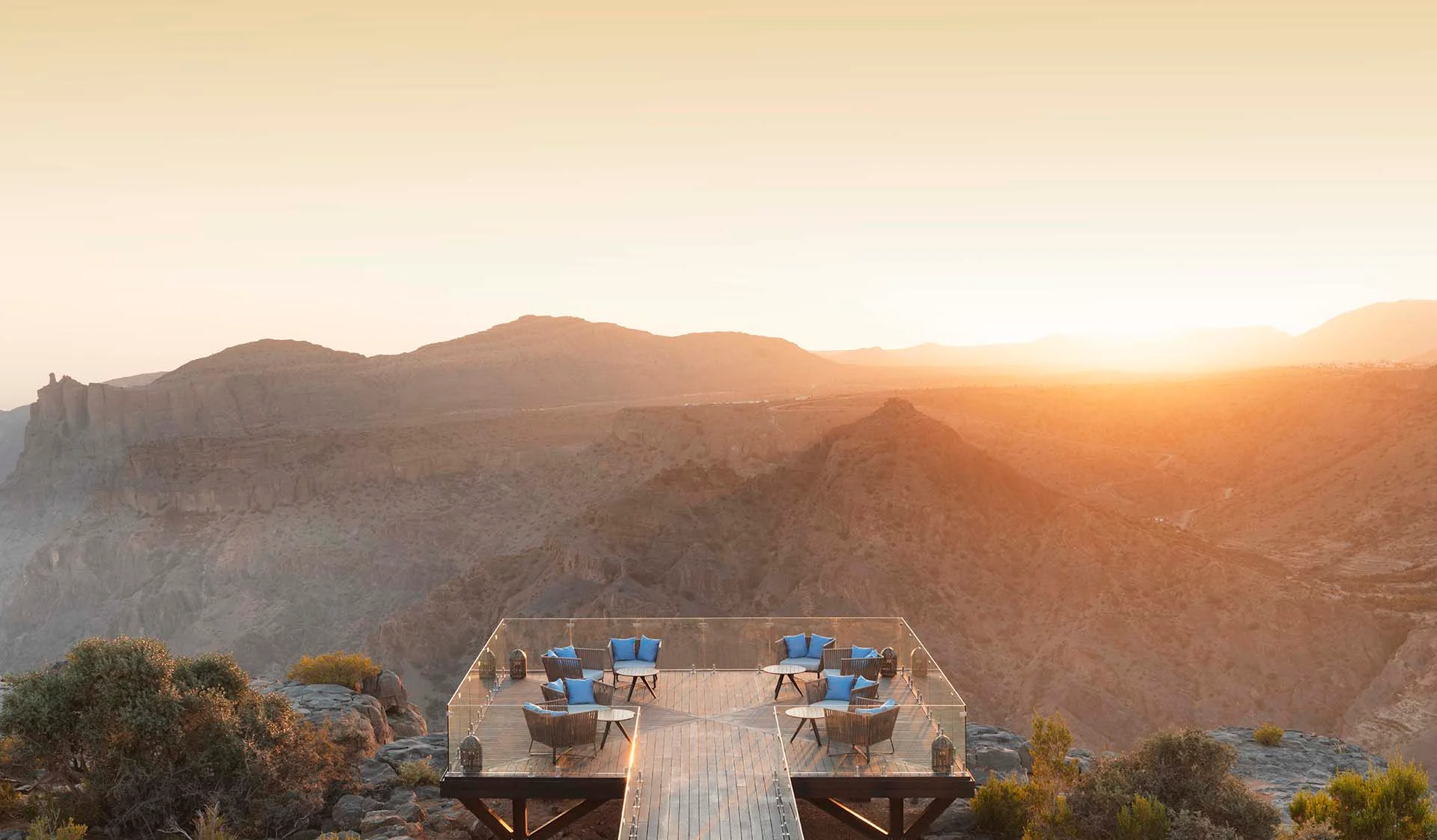
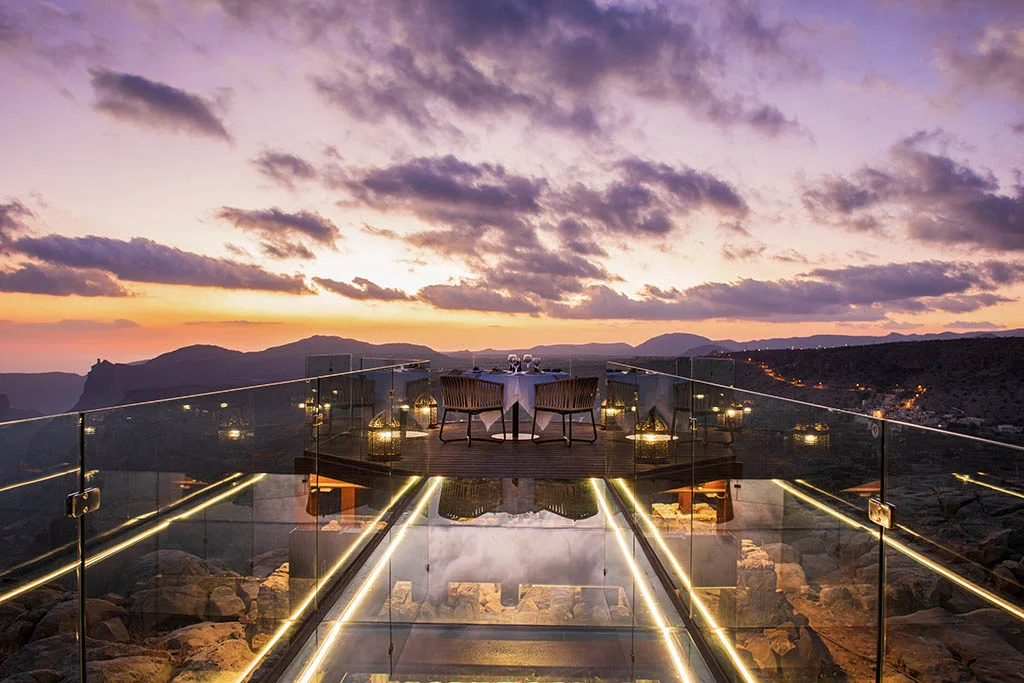
Anantara Al Jabal Al Akhdar is one of the world’s highest luxury resorts, and with this great height comes some amazing views. One of the signature features of the resort is Diana’s Point, perched over the canyon on a glass-sided platform and named after the late Princess of Wales, who visited in the 80’s. Diana’s Point became our favourite place for sundowners, although the view from our villa was almost as good. We devoted much of our stay to our poolside sun loungers and the dramatic vistas of the canyon and the terraced slopes below.
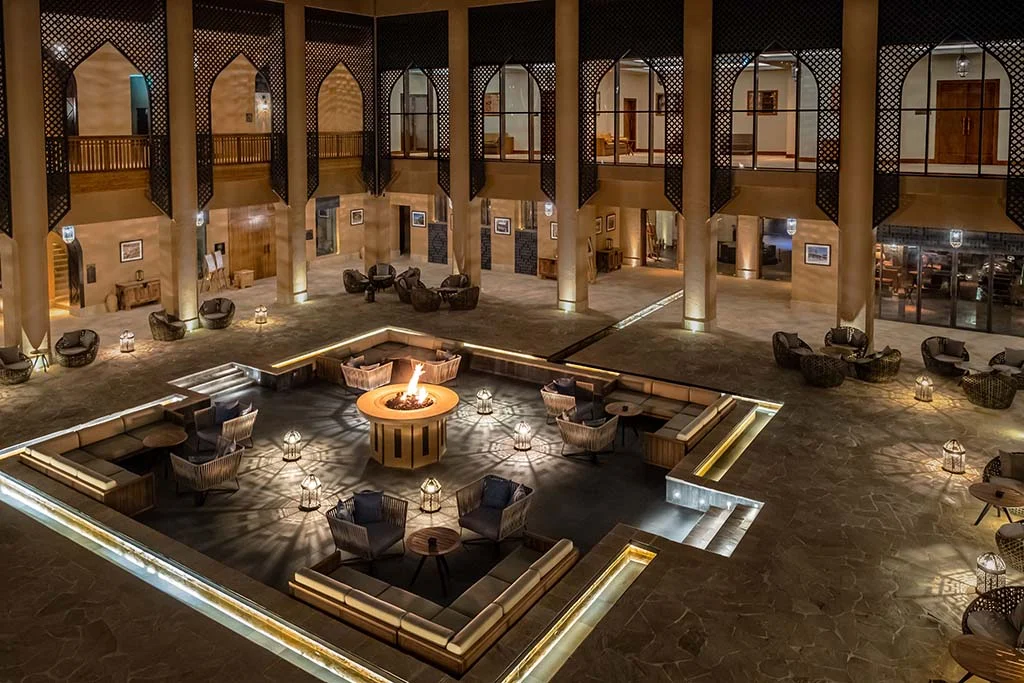
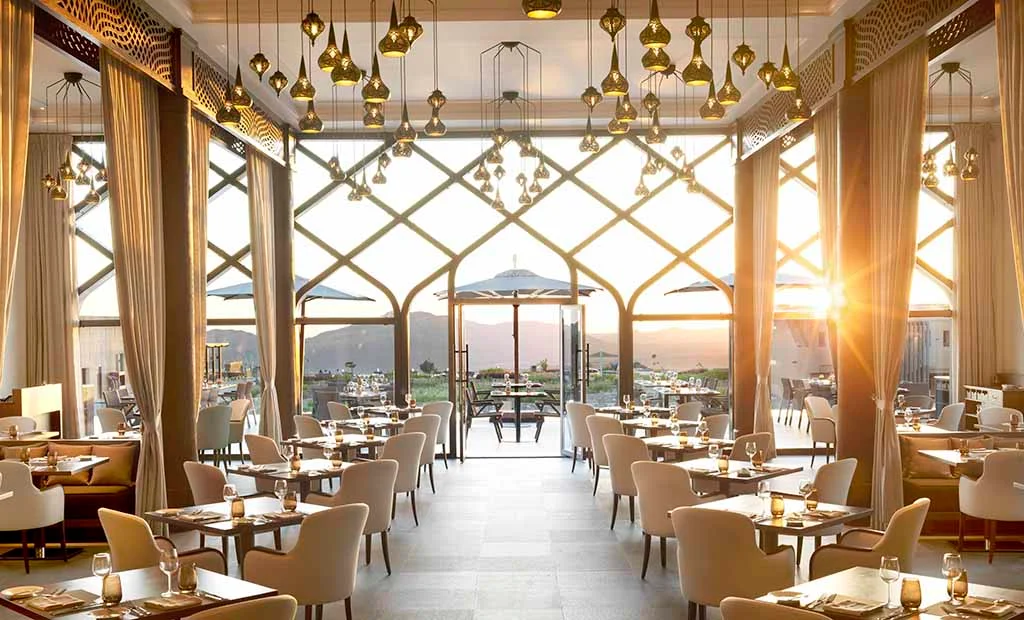
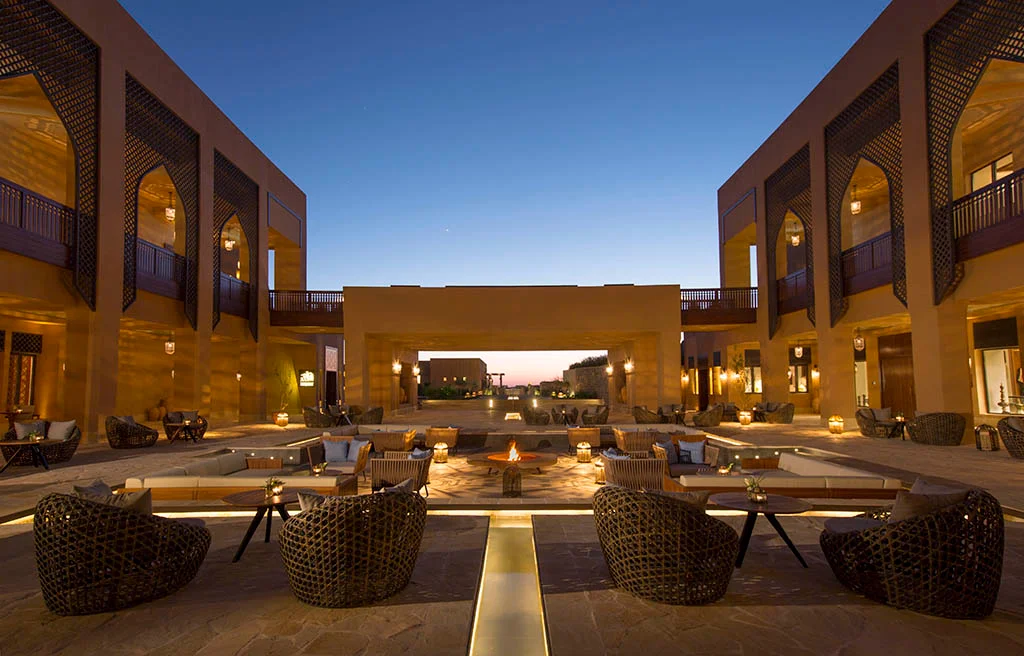
The resort’s layout is carefully designed around the rugged landscapeand the overall design reflects the cultural heritage of Oman, with fortress-like stone walls, arched windows, and intricately carved details. The interiors combine traditional elements like tadelakt plasterwork and zellij tiles, and pathways through the grounds lead to a luxurious spa and hammam, multiple dining areas and secluded spots for stargazing and quiet contemplation. It took four years in total to build the property, but it was time well spent!
From the mountains it was time to head back down to Muscat and explore a little more. Muscat, clings to the coastline, sitting between the Gulf of Oman and the towering Hajar Mountains.Surrounded by the shiny megacities of the Gulf, Oman favours tradition, and in line with the general local belief that no building should be taller than a coconut tree, the country has banned skyscrapers in favour of a low-rise, whitewashed aesthetic.
The Chedi Muscat was our home for the next few days, and it was a marvellous blend of a central city location with gorgeous ocean views. Meandering pathways, swaying palm trees, soothing water features, 21 acres of manicured green lawns, three azure swimming pools,and a private 370m long beach. The hotel has a legendary reputation in the Middle East. As the first luxury hotel in Oman, the Chedi became the benchmark for Omani hospitality, and two decades later people still flock from all around the world to experience its understated luxury and relaxing atmosphere. When we could drag ourselves away from swimming in the deliciously warm ocean, it was time to explore the city. We signed up for a private tour with local guide Hajer Al Muzayni. Hajer had her finger on the pulse of the city and aside from all the regular sights, she showed us some of the hidden gems and quirky corners of Muscat that most tourists might miss – beachside BBQ street food, Omani coffee, flavoured with cardamom, saffron and rosewater, plus the best place in town for halwa, a sweet, sticky, traditional Omani dessert that’s seasoned with rosewater, saffron and nuts.
First stop was the Sultan Qaboos Grand Mosque. Oman’s mosques are a notable exception to the country’s ‘no tall buildings’ policy and the mosque, in the heart of Muscat, dominates the city’s skyline with its 91m minaret. Quietly imposing from the outside, this fabulous example of modern Islamic architecture can accommodate 20,000 worshipers and with its ornate courtyards, mosaics, prayer halls and beautifully manicured gardens, is one of the prettiest sights in the city.
Next on the agenda wasthe Mutrahcorniche. We strolled the 2km promenade,pausing for cups of sweet cardamom tea, known as karak chai, while marvelling at the Masjid Al Rasool Al Adham, the blue-domed Shia mosque dating back to the 15th century. We called in at the Mutrah Souq, one of the oldest in Oman, and wandered the length of the covered market. Vintage furniture, souvenirs, jewellery, traditional Omani daggers, spices, incense and perfumes, we saw it all. Muscat’s glistening white marble Opera House was the last of the city’s sites we visited. It’s the city’s hub of arts and culture, regularly hostingmusical performers from all around the world. Performances are surprisingly affordable, but you can also just admire the Opera House from the outside or, like us, take a guided tour of the inside if you prefer.
After five hours with Hajer, we felt we’d had a good taste of the city. Back to the hotel and the beach. The rest of our Muscat visit was spent at the Chedi. Yoga classes, spa visits, swims in the ocean, walks along the beach, and eating until we could eat no more. We loved Oman, we loved the people, we loved the mountains and the Anantara Al Jabal Al Akhdar, we loved Muscat and the Chedi. We’d happily return and do it all again.
Chedi Muscat https://www.ghmhotels.com/en/muscat/
Anantara Al Jabal Al Akhdarhttps://www.anantara.com/en/jabal-akhdar
With Locals Muscat Tours https://www.withlocals.com/experiences/oman/muscat/tours/

In a town built on big names and bigger budgets, a family-run lodge on the
Nairobi, if experienced intentionally, will capture your soul. It is a city defined by a

Six nights, three Hemingways Collection addresses and my long-awaited first taste of Kenya’s North Coast.

DET spotlights the people, stories and creative energy of Africans living, working and thriving in

The refurbished David Livingstone Safari Lodge & Spa keeps its Zambezi riverfront soul, with lighter

Mawimbi Bush Camp is a new tented camp on the Kafue River in Zambia’s Kafue