

The Art of Slowing Down: Why Huvafen Fushi is the Antidote to the Over-Scheduled Holiday
In a world where even holidays have become packed with itineraries, early morning transfers and


Words by Sarah Kingdom
As the sun goes down, and the sky lights the surface of the watercrimson, orange and yellow, we sit looking out over seemingly the endless ocean before us. Silhouetted against the sky is a Southern Right Whale and her baby. Breaching and blowing, she belly flops on the surface of the water, a sensational sunset spectacle.
We are at De Hoop Nature Reserve, just a three-hour drive from Cape Town, but somewhere so totally different from the hustle and bustle of the city. This southernmost tip of Africa is a protected haven of grassy sand dunes, long white sandy beaches, mountains and a spectacular coastline, where whales breach and play. De Hoop is a biodiversity hotspot. The stunning 34,000-hectare reserve is a UNESCO Ramsar Wetland of International Importance and is a designated World Heritage site, with over 70km of pristine coastline.


A protected haven for marine life
The De Hoop Nature Reserve offers the complete outdoor experience – sea, sand dunes, wetlands, an array of rare plants, diverse animals and incredible bird life. It’s a favourite destination for hikers, cyclists, bird watchers and whale watchers alike. Take a scenic game drive, snorkel in tidal rock pools, or relax on the unspoiled beaches. The Marine Protected Area, which extends 5km out to sea, is one of the largest in Africa and provides a sanctuary for a vast array of marine life. Aside from the whales, you are likely to spot dolphins and seals, as well as at least 250 species of fish. For those venturing outside the reserve, the local area is characterised by quaint towns, a blossoming wine industry and some delightful places to sample delicious local cooking. There is something for everyone here.
The protected waters off De Hoop are a haven for endangered Southern Right Whales. Some 40% of the world’s population of these gentle giants return to these waters annually, to mate, give birth and rear their calves. The De Hoop Nature Reserve is an important destination for these magnificent mammals, and during the season,around 120 whales call De Hoop home. At the peak periods of the season (June and December), as many as fifty can be spotted in a day, making the reserve one of the best spots for land-based whale watching in the world. The whales come so close to shore that visitors can simply relax on the dunes and watch them.


Immersive learning in it for all.
For a more immersive experience, join a guided marine walk and explore the coastal rock pools, fossilised sand dunes, beach and rocky shore. Your guide will show you marine life of all shapes and sizes, from bright orange starfish to purple sea urchins, limpets, barnacles, octopus, and some of the many sea birds that call these shores home. And when you’ve had your fill looking down at the critters in the rock pools, you can grab a snorkel and join them. Snorkelling in the large, clear rock pools is one of the best ways to experience this magical marine world.
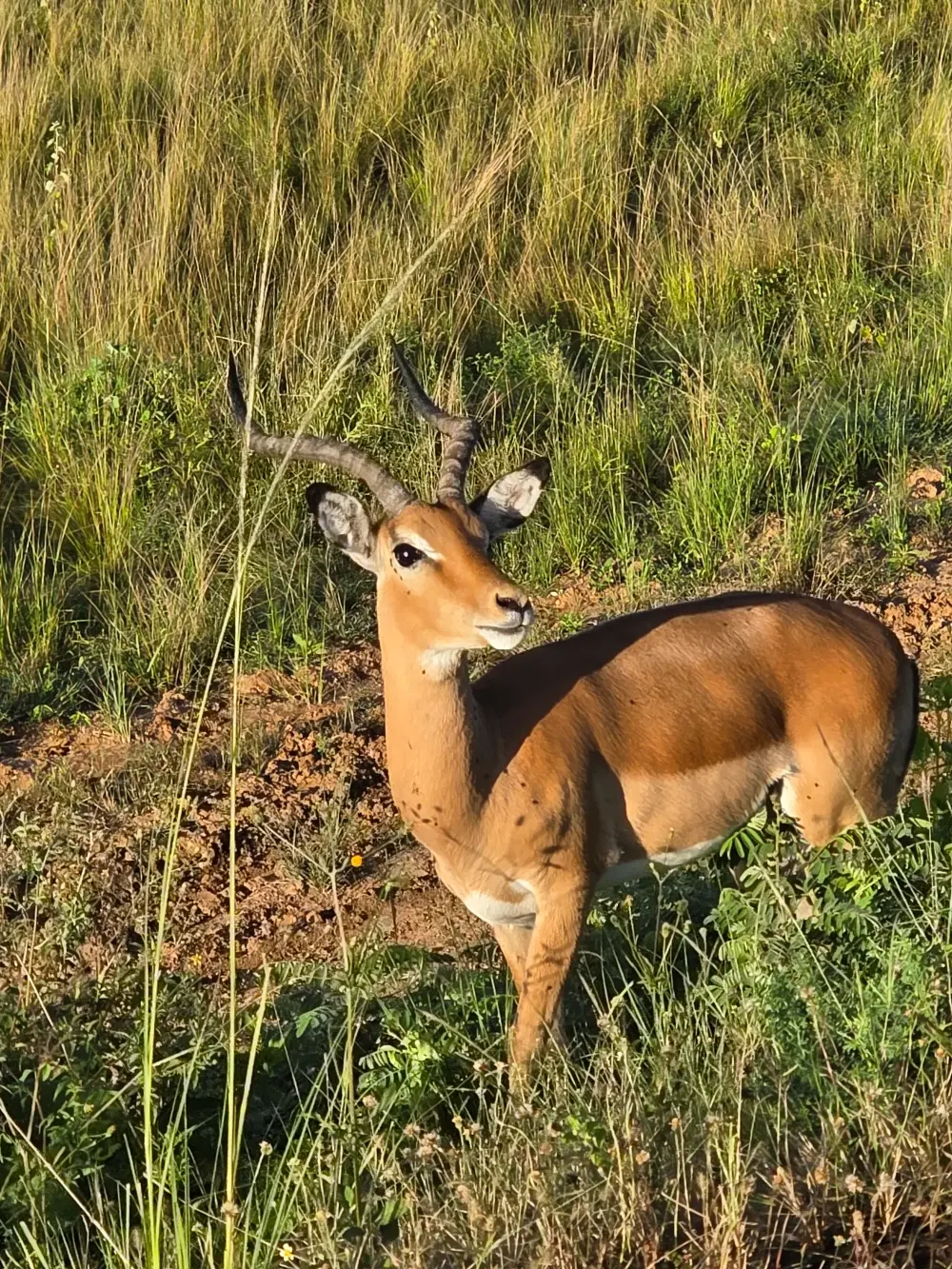
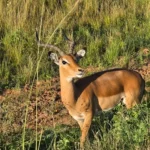
Back on land, De Hoop Nature Reserve is home to an array of wildlife. 86 mammal species are found here, including the rare bontebok and Cape mountain zebra, as well as elegant elands, grey rhebuck, baboons, mongoose, caracals and, if you’re lucky, even the occasional leopard.
There are numerous ways you can get out and enjoy the wildlife. Take a game drive in an open vehicle, join a guided mountain bike ride or go for a hike, either guided or on your own. In the absence of large predators, you have the opportunity to safely get up close and personal with the wildlife. For keen hikers, De Hoop has one of the best hiking trails in South Africa, the Whale Trail which you can learn more about from https://www.capenature.co.za/activities/the-whale-trail-de-hoop-nature-reserve. The 5-day, 55km route, through one of the Western Cape’s most unique and diverse nature reserves, is popular, and bookings are required well in advance.


Unpacking the uniqueness of De Hoop Nature Reserve
De Hoop Nature Reserve is part of the world’s smallest, most threatened plant kingdoms, the Cape Floral Kingdom. Fynbos (which comes from the Afrikaans word meaning ‘fine plants’) is the dominant type of vegetation here. This is a special and unique type of vegetation that grows in nutrient-poor soils and is well adapted to fire and drought. There are approximately 1,500 different varieties found here, a large percentage of which are rare, threatened and endemic. If you take a guided hike on one of the inland trails, you’ll be knee-high in fynbos. Yellow, coral, pink, purple and hundreds of shades of green, with the most incredible perfumes. You may even see some beautiful proteas (the national flower of South Africa), which flower here in numerous sizes and colours.
The De Hoop wetlands are an internationally Important Bird and Biodiversity Area (IBA). For keen birdwatchers look out for the endemic Southern Boubou and the rare Malachite Sunbird, and even the least interested birdwatchers amongst you will enjoy the sight of a flamingo or a fluffy baby ostrich fresh out of its egg. Keen birders can head out on a 2-hour walking experience with a qualified guide around the wetlands, or visit the nearby breeding colony of rare Cape. A short but steep hike, up the Klipspringer Trail, leads you to the lookout point over the colony, and it’s well worth the climb.
Once you’ve had your fill hiking, cycling or walking, you can always relax on a boat trip exploring the De Hoop waterways and wetlands. Flamingos, pelicans, perhaps a fish eagle soaring overhead, or if you are lucky, a sleek Cape clawless otter cavorting at the water’s edge. Go out in the morning and enjoy a cup of tea or coffee with refreshments, or head out in the afternoon with a glass of wine and some savoury snacks.


De Hoop and Surrounds: Where to Stay.
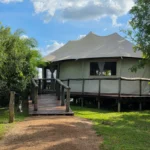
So, where does one stay to experience De Hoop in all its glory? Away from the coast, and overlooking the wetlands, is the historic De Hoop Collection https://www.dehoopcollection.com/. Accommodation ranges from charming thatched cottages and family-friendly rondavels to elegantly restored suites and villas. Many overlook the shimmering vlei or open plains where bontebok, ostrich, and eland roam freely. Interiors blend Cape Dutch heritage with contemporary comfort – expect thick whitewashed walls, cool stone floors, and generous outdoor spaces perfect for braais under the stars.
One morning here, I was lucky enough to find myself surrounded by a family of ostriches while walking to breakfast. A male and his bride, with 12 knee-high chicks in tow. They were calm enough not to run from me, but still a little shy, and I could see both parents were keeping a watchful eye on me. I kept my distance, especially from those legs. If cornered, an ostrich can deliver a kick capable of killing a lion, and I wasn’t taking any chances!
The De Hoop Collection’s Origins of Early Southern Sapiens Behaviour exhibition offers a compelling cultural interlude. Opened in January 2024 and curated by Craig Foster (of My Octopus Teacher fame), alongside archaeologist Petro Keene, the exhibit showcases genuine artefacts, multimedia presentations, and interpretive displays drawn from iconic coastal sites like Blombos Cave, Klipdrift Shelter, and Klasies River—where early Homo sapiens lived between roughly 120,000 and 50,000 years ago. Rooted firmly in the message “We Are All One,” the exhibition highlights both the region’s archaeological significance and our shared African origins, offering visitors a rare chance to connect with our deep past.


The De Hoop Nature Reserve offers the complete outdoor experience – sea, sand dunes, wetlands, rare plants, diverse animals, and incredible bird life. There is something for everyone here. The best time to visit is August to November, during whale watching time, but honestly, any season is good! Adventure, peace and tranquillity, luxury and wilderness; De Hoop has it all.
About the Writer: Travel writer, mountain guide, yoga teacher, trail runner and mother, Sarah Kingdom was born and brought up in Sydney, Australia. Travelling around Africa at 21, she fell in love with the continent and stayed. Sarah guides on Kilimanjaro several times a year, and has lost count of how many times she has stood on the roof of Africa. She has climbed and guided on mountains all around the world and now spends most of her time visiting remote places in Africa. When she is not traveling, she runs a cattle ranch in Zambia with her husband.

In a world where even holidays have become packed with itineraries, early morning transfers and

For those of us lucky enough to have been to a safari lodge, there is

Explora Journeys reimagines luxury travel with a hotel that moves with you—discover why the future
Meet Françoise Malby-Anthony, the Parisienne who became guardian of Thula Thula, South Africa’s iconic elephant
Escape Dubai’s fast pace for the profound stillness of Zambia’s bush at Ila Safari Lodge—a
Journey through Zambia’s Kafue National Park on a 12-day expedition blending untamed wilderness, curated luxury